How we do it

How we get a legacy system under control

When an important system has become hard to understand or change, we do not start by suggesting new technology. First, we find out how the system is used, where the risks are and what the business actually needs. Then we take the next steps in the right order.

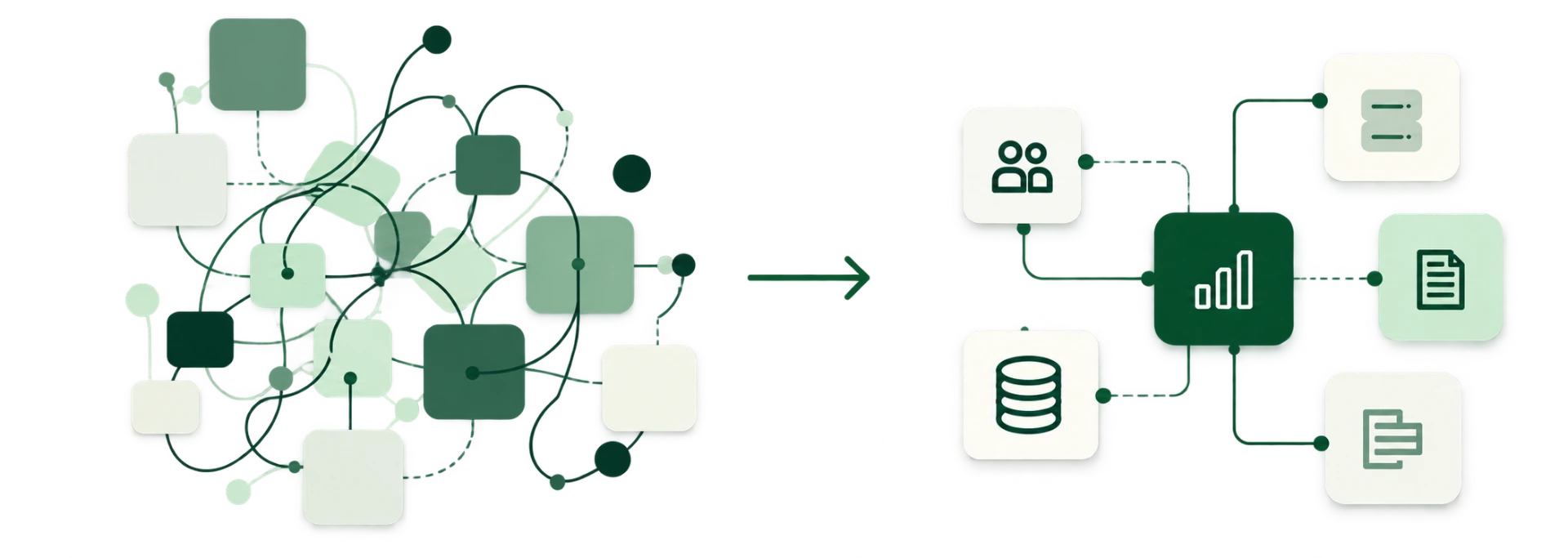
A tangled system with many dependencies becomes a clear and coherent structure

Understand the current situation before making changes

An older system often reflects years of decisions, adaptations and business knowledge. That is why we need to understand both the technology and the day-to-day work it supports before we start making changes.

Read more

We look at how the system is used, which parts are critical and what happens if something stops working. The goal is not a technical report for its own sake. The goal is to know where we stand.

What matters to the business?

Not everything in an old system is equally important. Some features are used every day. Others remain out of habit. Some manual workarounds may be a bigger problem than the technology itself.

Read more

That’s why we talk to the people who use the system and find out what actually needs to work better.

Find the risks and dependencies

We map the code, integrations, databases, environments and other dependencies that affect the system. We also look at issues such as reliance on specific people, gaps in documentation and technology that is no longer supported.

Read more

That makes it clearer what’s urgent, what can wait and what you may not need to do at all.

Prioritise what makes a difference

An old system rarely needs to be changed all at once. Often, you can start with the parts that pose the greatest risk or cause the most friction in day-to-day operations.

Read more

It could be an upgrade, better documentation, an integration that needs to be stabilised or a part of the system that needs further development.

Make changes without disrupting the business

Once the way forward is clear, we make the changes step by step. This reduces risk and lets us check that each change actually works before moving on.

Read more

You should always know what we're doing, why we're doing it and what the next step is.

You do not need to have the answers from the start

You don't need to know whether the system should be modernised, developed further or replaced. That's part of what we help you work out.

Tell us what has become difficult, and we will start there.