Understand where the project stands
We review what is in place, what remains and what is stopping you from moving forward.
Stalled projects
When a development project has lost direction, we first need to understand where things stand now. We review the project, identify the problems and create a plan you can work from.
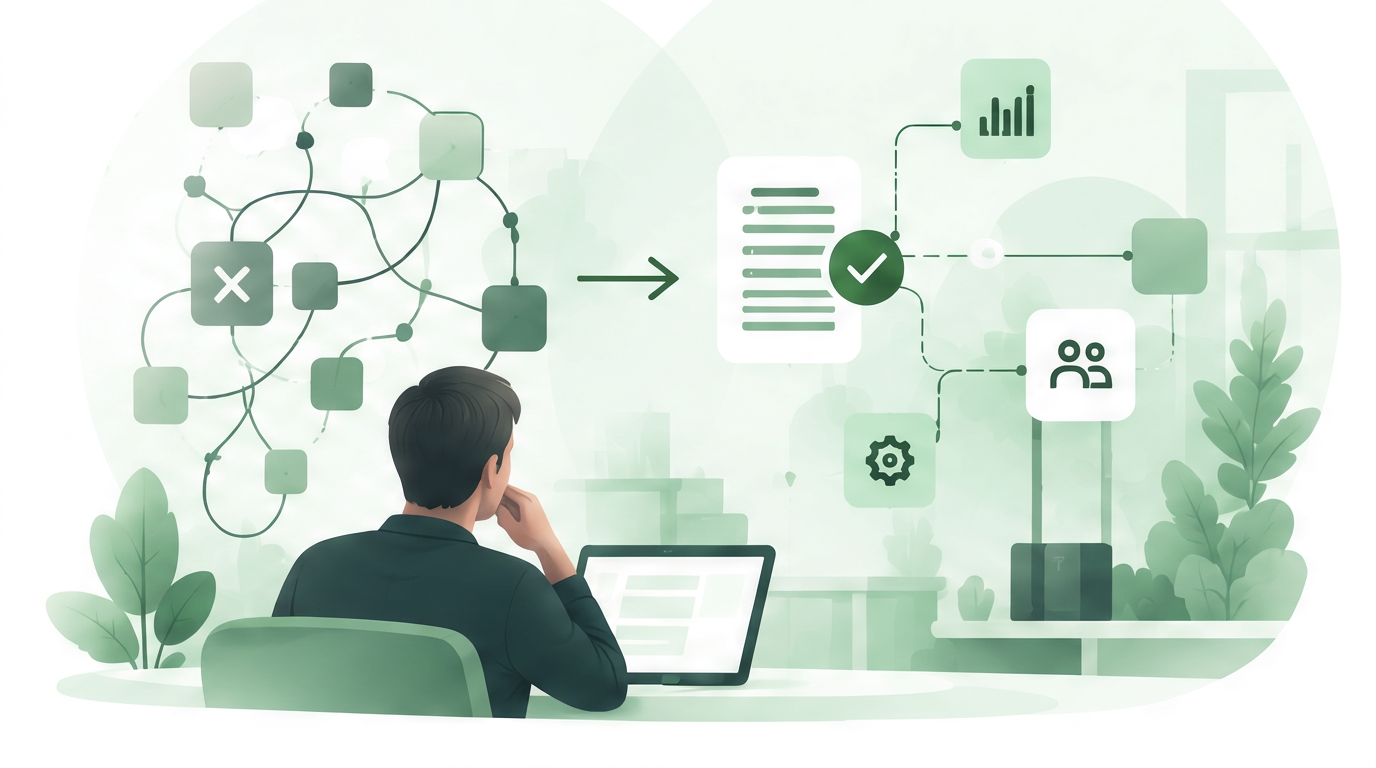
We review what is in place, what remains and what is stopping you from moving forward.
The business and the development team need a shared understanding of the goal and what it takes to get there.
We make the obstacles clear, prioritise the next steps and create a plan with clear responsibilities.
From a shared understanding of where things stand to a plan that helps you move forward.
We start with what actually exists – not what the old plan says should exist. We review the work delivered so far, what is still needed, technical obstacles, dependencies and decisions that still need to be made.
The goal is for the business and the development team to have the same understanding of the project.
A project becomes hard to manage when different people have different ideas about the goal. We help business and development teams agree on what needs to work for the project to be completed.
It also makes it easier to distinguish what is really needed from what can wait.
Technical problems, unclear requirements, resource shortages and dependencies need to be out in the open. Once you can see the obstacles, you can prioritise them and decide what to do.
We do not try to hide uncertainty behind a new schedule. First, we need to understand what is actually blocking the project.
Not everything needs to be solved at once. We focus on what is blocking the next step and separate essential work from what can wait until the core solution is working.
The plan needs to be clear enough to show what happens next, who is responsible and what decisions need to be made.
It should help the project move forward – not just look good in a presentation.
When technology is a big part of the problem, traditional project management isn't always enough. We can dig into code, architecture and dependencies when needed, while explaining the implications so your team can make informed decisions.
That makes it easier to understand which technical problems really affect the project's progress.
Being in control doesn't mean every problem disappears immediately. It means you know what the problems are, what's being done about them and what's needed to move forward.
You should be able to see the next step and understand why it comes next.
You do not need to tidy up the project before bringing in help. Give us the material you have and tell us what you need to get finished, and we will start there.